Disney Best Services · HIC #215784

Deck Builder on Cape Cod

Disney Best Services builds and replaces decks across Cape Cod, from Provincetown through to Plymouth, including the framing and footings underneath.

A deck here lives outdoors in salt air through a freeze-thaw winter. What decides its life is the structure under the boards, not the boards themselves.

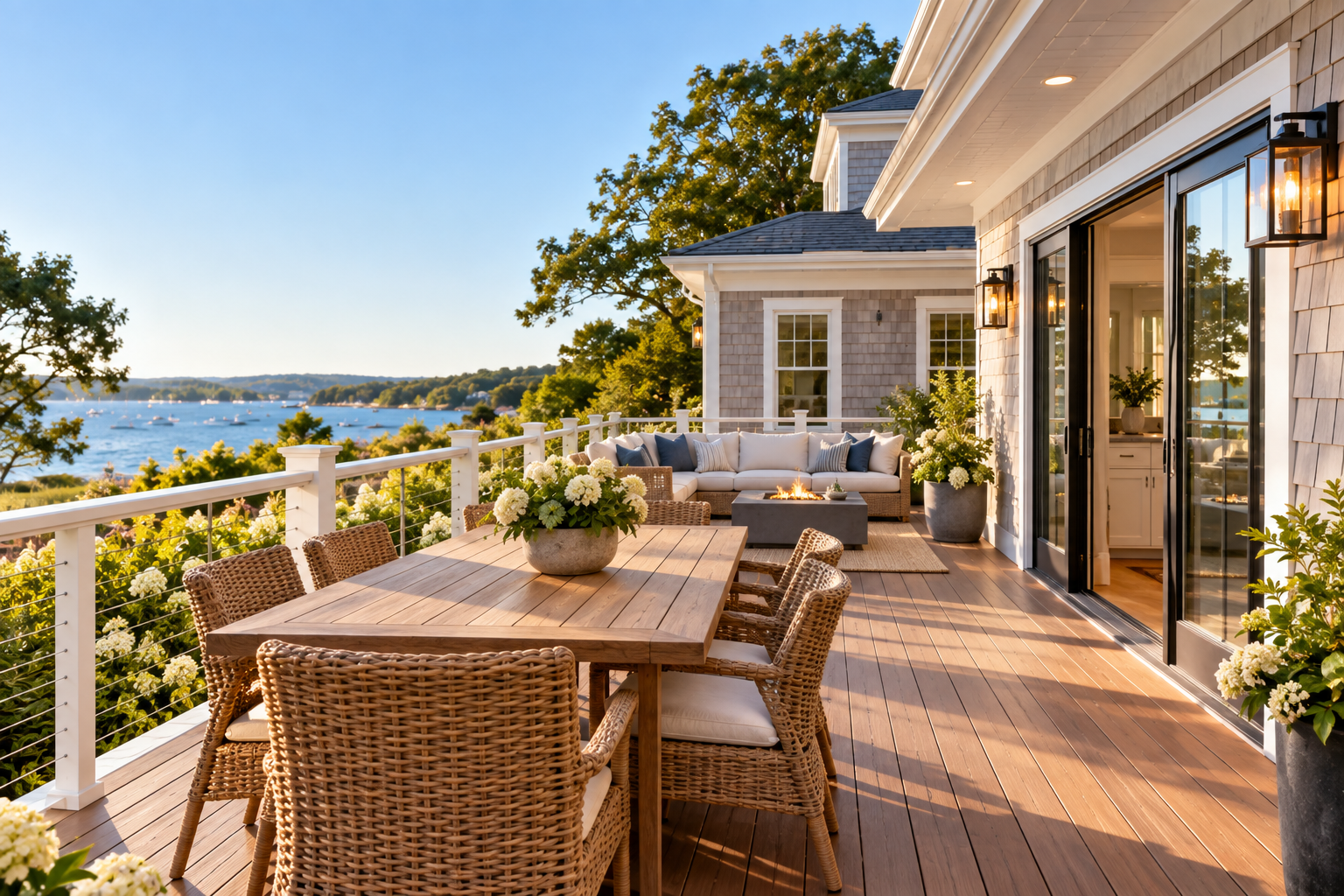
Deck built by Disney Best Services on Cape Cod
License

HIC #215784

Registered Massachusetts
home improvement
contractor

Protection

$1M General Liability

Workers’ compensation
coverage

Planning

Free Estimates

On-site review before
a written quote

Warranty

One Year, Written

Workmanship coverage
provided before
work begins

Our Work

New deck construction and deck replacement across Cape Cod

Illustrative newly built deck on a Cape Cod home
New Decks

New Deck Construction

Footings, framing, decking and railings built to the plan the town approves. The structure is sized for the span and the exposure, which near the water is not the same calculation as inland.

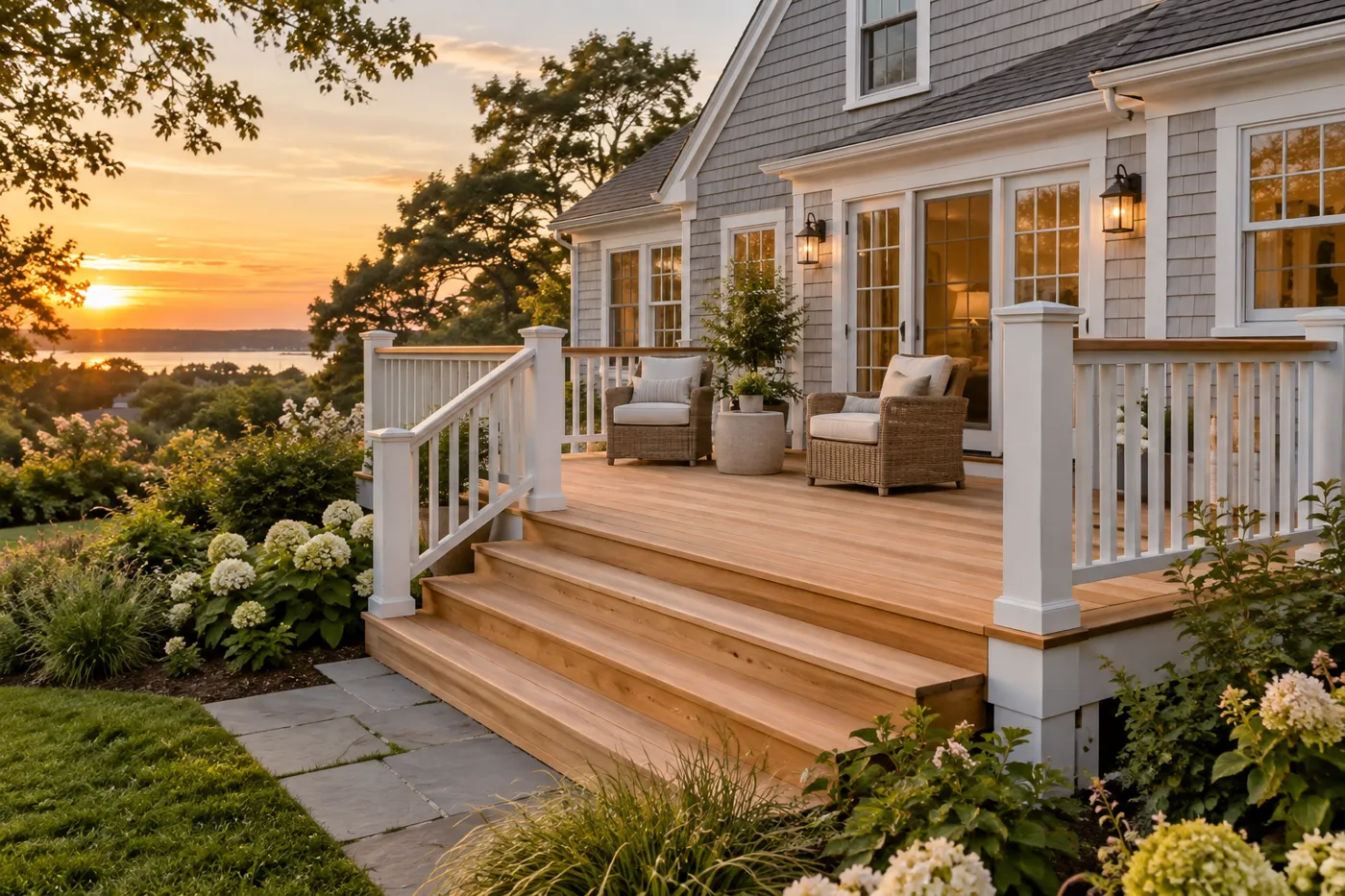
Illustrative deck replacement project on Cape Cod
Replacement

Deck Replacement

When the ledger, posts or framing are compromised, replacement protects the investment better than resurfacing over a structure that is already failing.
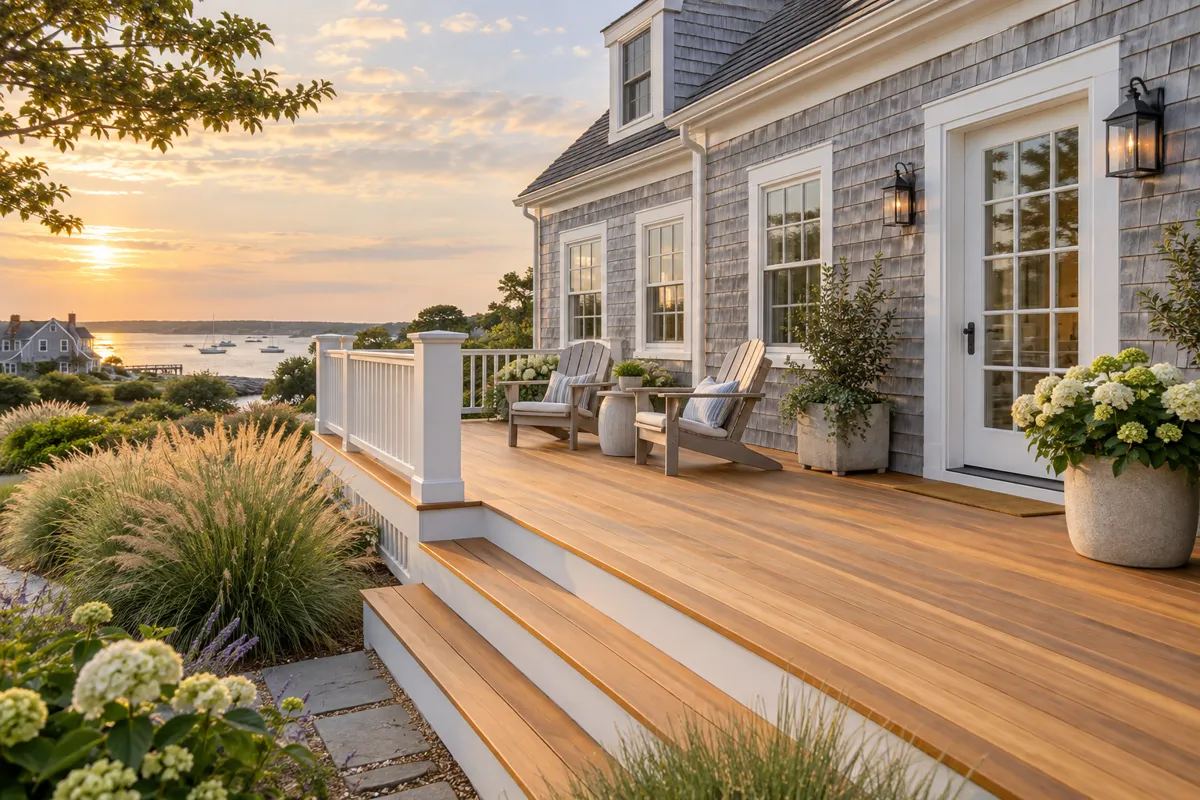
Illustrative deck repair and resurfacing on Cape Cod
Repair

Deck Repair and Resurfacing

Soft boards, corroded hardware or a few damaged spots over sound framing are a repair. We inspect the structure before recommending a scope rather than quoting from the surface.

Decking material choice

Which decking material suits salt air, sun and the upkeep you will actually do

Decking material changes maintenance and how the surface handles salt, sun and spray. Material does not change the framing or the hardware underneath. Pressure-treated pine, capped composite, capped PVC and tropical hardwood each trade upfront cost against upkeep. Choose by how much maintenance gets done in year three.

Decking materialBehavior in salt air and sunMaintenance it asks forPick this when
Pressure-treated southern yellow pineTreated against rot and insects. ACQ and copper azole chemistry attacks ordinary galvanized hardware and bare aluminum. Checks and cups as the wood dries.Clean and re-seal on a repeating cycle. Expect to swap split boards.Upfront cost drives the decision and a maintenance habit is realistic.
Capped compositePolymer cap resists salt, staining and fade. The wood-flour core stays sealed while the cap is intact. Dark colors run hot in direct sun.Washing. No sealing. A gouge through the cap cannot be sanded out.Low upkeep matters and a wood-look surface is wanted.
Capped PVCNo wood flour in the core, so there is nothing in the board to absorb water. Lighter than composite. Moves more with temperature swings than composite does.Washing only.The deck sits in full sun, salt spray or pool splash and the lightest-maintenance board is the point.
Tropical hardwood (ipe, cumaru)Very dense and naturally durable. Weathers to silver-grey under UV unless oiled. Density demands pre-drilling and stainless fasteners.Penetrating oil to hold color, or let it grey. Re-oiling is the labor.Real wood is the requirement and oiling will get done.

Fastener and connector grade is selected for the salt exposure and the treated framing underneath, not for the decking material on top.

Does building a deck on Cape Cod require a permit?

Yes. A new deck, and a replacement that changes the structure or footprint, requires a building permit from the town, and coastal properties can carry additional review depending on setbacks and flood zone.

We handle the application and the inspections as part of the project, so the work is signed off under the correct registration.

Should I repair or replace my deck on Cape Cod?

If the framing is sound and the problem is surface boards, corroded fasteners or a localised soft spot, repair is the right call. If the ledger, posts or joists are compromised, replacement is the cheaper answer over any real timeframe.

We inspect the structure first. The difference is usually not visible from standing on it.

Disney Best Services truck parked at a Cape Cod home

How much does a deck builder cost in East Harwich, MA?

Size and shape drive it, then the decking material, the site conditions and how much railing and stair work the design needs. Lots near the water often need additional structural allowance for wind and moisture exposure.

We assess the property and put a firm price in writing. The estimate visit is free.

Cape Cod Conditions

What does salt air do to the metal holding a Cape Cod deck together?

Salt air corrodes the metal in a deck faster than it damages the boards. Airborne chloride settles on screws, joist hangers and post bases, then pulls moisture out of the air and holds it against the steel. Corrosion runs in the connections nobody looks at again.

Two chemistries work against that metal. Pressure treatment carries copper, and copper in contact with ordinary electro-galvanized steel in a wet connection corrodes the steel. Chloride from salt spray then keeps the same connection damp and conductive long after rain has dried. Hot-dip galvanized hardware with a G185 coating and ASTM A153 Class D fasteners buys real service life. Type 316 stainless, which contains molybdenum, holds up to chloride better than Type 304. Bare aluminum flashing should never touch treated lumber.

Coastal wind loads the same hardware. Wind pushes up under an elevated deck and sideways against railings, and the connectors carry that load. Corrosion and wind act on one set of parts: the connector resisting uplift is the connector the salt is eating. On an exposed site near the water, hardware grade is a structural decision, not a finish decision.

Deck framing and fasteners built for Cape Cod weather

Before boards cover it

What can you ask to see at the ledger before decking hides it for good?

The ledger is the board bolted to your house that carries one edge of the deck. Flashing over the ledger keeps water out of the wall. Both get covered by decking on the day the surface goes down, and neither is visible again. Ask to see each one first.

Ask to see the wall open before the ledger is fastened

A ledger fastened through siding, or onto a wall with the siding left in place, leaves a compressible layer in the load path and a channel that holds water against the house. Correct work means the siding cut back, the ledger landing on solid framing, and the water-resistive barrier lapped so water runs out over the flashing instead of down behind the ledger.

The wall is open for part of one day. During that window the condition of the sheathing and framing is visible from the ground, and a photograph taken then is the only record that exists once the ledger is on.

Ask for the flashing photographed from directly above

Ledger flashing works by shedding water out of the wall and onto the deck. A cap flashing over the top of the ledger, tucked under the water-resistive barrier, does that. Flashing tape used alone, or flashing lapped the wrong way, routes water into the joint instead of out of it. Both mistakes look identical from the finished deck.

Decking covers the flashing on the day the surface goes down. Before that, the detail is in plain view for an hour. Ask for photos of both ends of the ledger as well, because the ends are where water has to leave the detail.

Rankine Disney, owner of Disney Best Services, on a Cape Cod job site

Four failure modes

Where decks fail, and the day each failure was decided

Decks fail at connections and at end grain, not in the middle of a board. Four failure modes account for most of it: corroded hardware, thermal movement in composite boards, post bases that hold water, and railing posts that loosen. Each one is decided before decking is screwed down.

Fastener and connector corrosion inside treated framing

Why it happensACQ and copper azole treatments carry copper. Copper against ordinary electro-galvanized steel in the presence of moisture drives corrosion of the steel, and salt air accelerates it. Joist hangers and screws lose metal inside the frame while the decking above still looks new.

What prevents itDecided at material ordering. Hot-dip galvanized hardware rated for treated lumber, or stainless, is specified before the frame goes up and cannot be upgraded afterward.

Composite boards bowing or opening at the ends

Why it happensCapped composite and cellular PVC change length with temperature. Boards butted tight on a cool install day press against each other in August and bow. Boards gapped wide on a hot day open up in winter. The movement is in the material, not in the workmanship.

What prevents itDecided at installation, from the board temperature that day and the gap the manufacturer instructions call for on that product.

Post bases holding water

Why it happensA post in direct contact with a slab, pier or soil wicks water into the end grain and stays wet. Rot starts at the bottom of the post, inside the base, where nothing shows from outside until the post moves.

What prevents itDecided at framing. A standoff post base lifts end grain off the surface and lets the base drain.

Railing posts working loose on an exposed deck

Why it happensCoastal wind pushes on people and on the railing itself, and the load lands at the post connection on the rim. A post fastened only through a rim board cycles back and forth across seasons and loosens.

What prevents itDecided at framing, with blocking and tension connections set before decking covers the rim.

A decking manufacturer warranty and an installation warranty are two separate instruments. The board warranty covers the board: fade, staining and delamination of that product. Coverage is often prorated, so the payout drops each year, and it pays for material only. Framing, fasteners, flashing and labor sit outside it. Disney Best Services carries a 1-year written workmanship warranty on the installation, and materials and manufacturer defects stay with the manufacturer. Read both documents before picking a board.

Frequently Asked Questions

Framing, hardware and decking material questions

What screws and brackets should a deck near the water use?

Type 316 stainless resists chloride better than Type 304 because 316 contains molybdenum. Hot-dip galvanized hardware with a G185 coating and ASTM A153 Class D fasteners is the common alternative away from direct spray. Pressure-treated framing rules out ordinary electro-galvanized screws in either case.

Can new decking go on my old deck frame?

Old framing can carry new decking only if the framing is sound. The parts that decide it are the ledger, the ledger flashing, the post bases and the hardware. Hidden corrosion and rot in those four places are the reason a resurface turns into a rebuild.

Why do composite deck boards need gaps at the ends?

Capped composite and cellular PVC change length with temperature. Cellular PVC moves more than wood-flour composite. End gaps give a board somewhere to go, so boards do not press against each other and bow in summer heat. Gap size comes from the manufacturer instructions and the board temperature at install.

Does a deck have to be bolted to the house?

A freestanding deck carries its own load on its own posts and never penetrates the wall. No ledger means no ledger flashing and no opening in the water-resistive barrier. The trade is more posts, more footings and lateral bracing, plus a gap at the house that collects debris.

How do I tell if the board against my house is rotting?

Rot at the ledger shows on the house before it shows on the deck. Look for dark staining or peeling paint on the siding under the deck line, rust streaks at the bolt heads, a spongy feel where the deck meets the wall, and movement when the railing is pushed.

Will an ipe deck turn grey?

Ipe and cumaru weather to a silver-grey under UV. Greying is a surface change in the wood fibers and does not reduce the density or durability of the board. A penetrating oil holds the brown color and has to be reapplied. Letting a deck grey costs nothing structurally.

Can aluminum flashing be used against pressure-treated wood?

Bare aluminum corrodes in contact with ACQ and copper azole treated lumber. Copper in the treatment and the aluminum form a galvanic pair, and moisture completes it. Copper, stainless steel and polymer-coated flashings are compatible. Flashing failure at the ledger becomes a wall problem, not a deck problem.

Disney Best Services · East Harwich

Deck building services from Provincetown to Plymouth

If you are still working out the scope, that is the right moment to get in touch. We look at the space, assess what is there, and set out what the deck project involves before you commit to anything.

Disney Best Services is a Registered Massachusetts Home Improvement Contractor, HIC #215784, with $1 million in general liability cover and a one-year written workmanship warranty.

Get a Free Estimate