HIC #215784
Registered Massachusetts
home improvement
contractor

Disney Best Services · HIC #215784
Disney Best Services paints interiors and exteriors across Cape Cod, including walls, ceilings, trim and the preparation work that decides how long the finish holds.
Exterior paint on the Cape is a coastal exposure problem. Salt air, UV off the water and a freeze-thaw winter all act on the film, and preparation is what separates a finish that lasts from one that fails in two seasons.
HIC #215784
Registered Massachusetts
home improvement
contractor
$1M General Liability
Workers’ compensation
coverage
Free Estimates
On-site review before
a written quote
One Year, Written
Workmanship coverage
provided before
work begins
Our Services

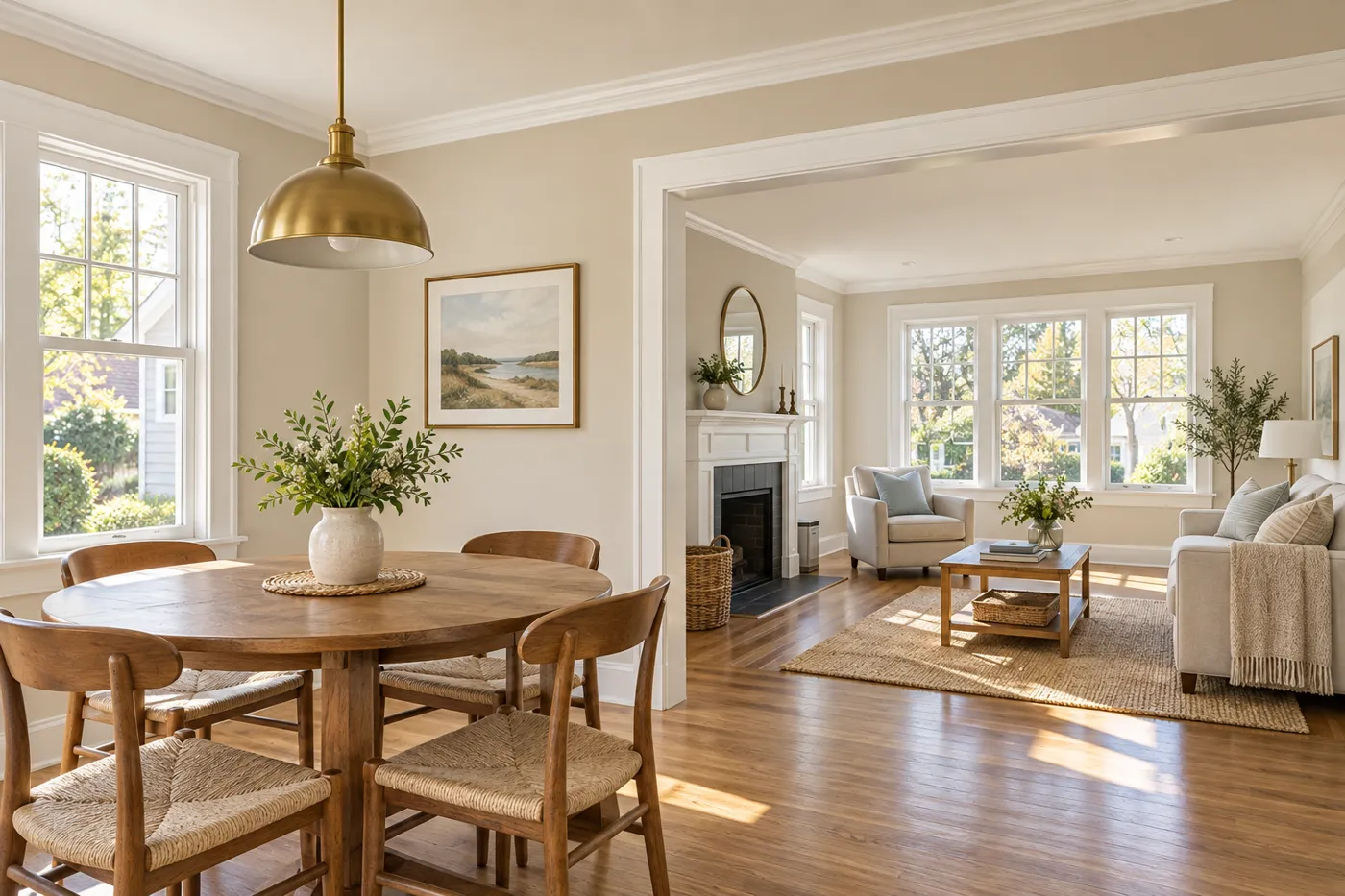
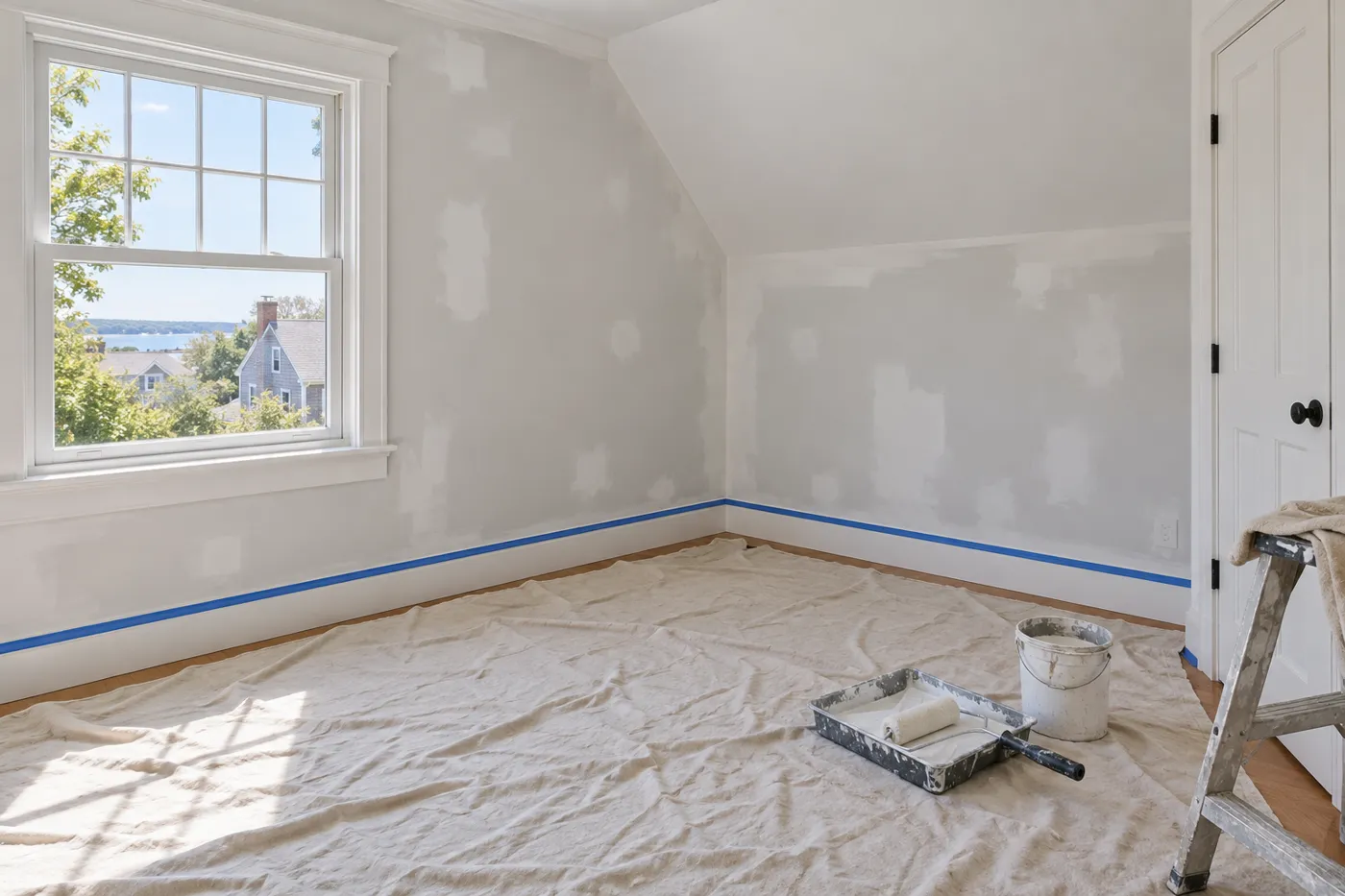
Walls, ceilings and trim, with the filling, sanding and masking done before a brush is loaded. Most of the time on an interior job is preparation, and it is what the result depends on.
Exterior work is scheduled around the weather window and begins with washing, scraping and priming bare material. Coastal exposure is unforgiving of a coat applied over a surface that was not ready.
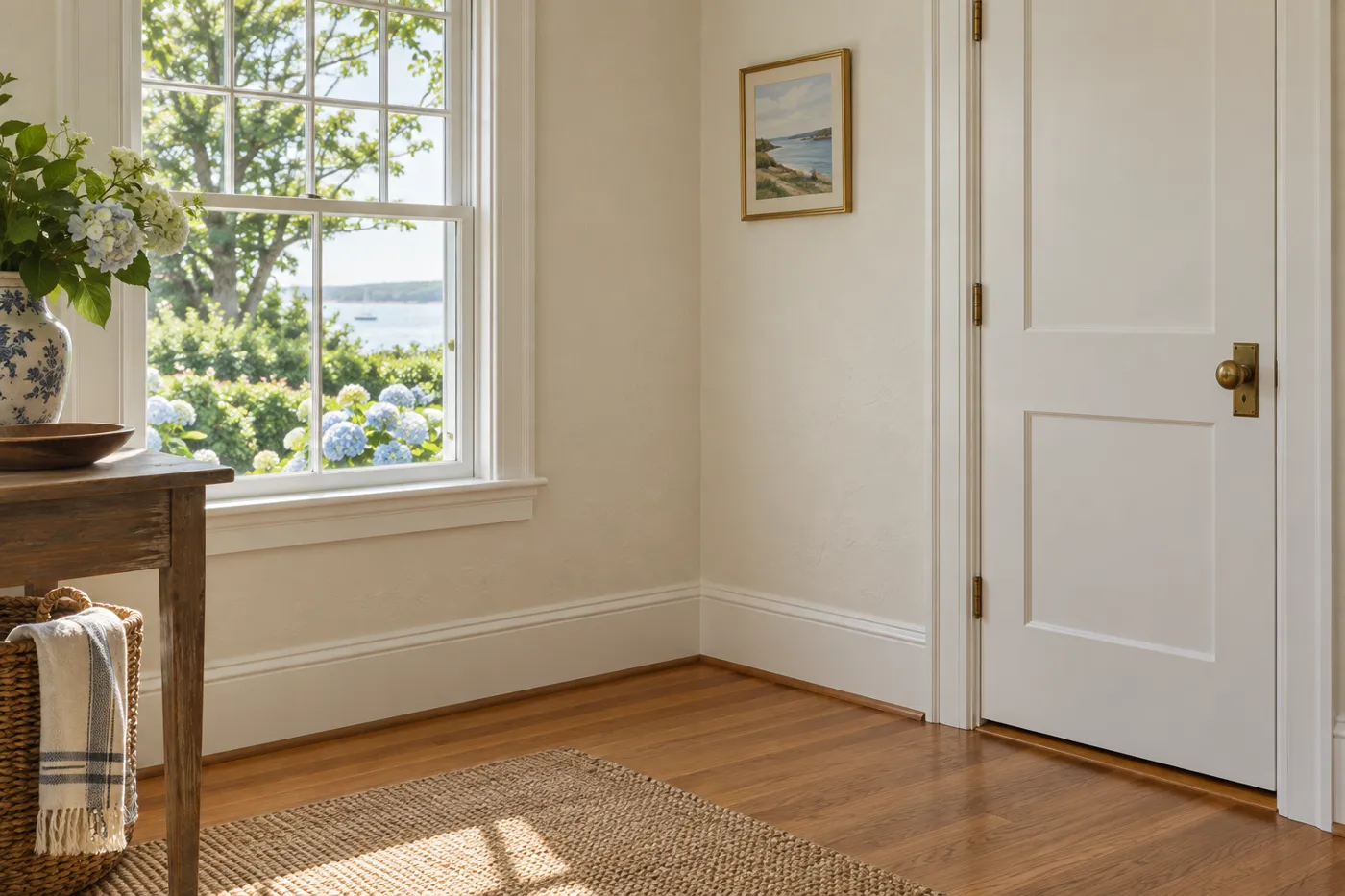
Trim, casings and window detail take the most weather and show the most wear. They are also where a careful line is immediately visible from the street.
Coating choice
Weathered cedar accepts four broad finishes, and each one decides what the next repaint can be. Paint is the hardest choice to reverse. Semi-transparent stain and bleaching oil stay reversible for longer. The right answer depends less on the first result and more on the maintenance you want years from now.
| Finish | On weathered cedar | What it commits you to next time | Pick this when |
|---|---|---|---|
| Paint over stain-blocking primer | Forms a film that sits on the surface. Cedar extractives have to be blocked first or tannin bleeds through as brown streaking after the first wetting. | Paint, for the life of the siding. Taking a sound paint film off shingles is rarely practical, so every future cycle is scrape, prime, repaint. | The siding is already painted, or you want one exact color held across the whole house and the trim. |
| Solid-color stain | Sits closer to the wood than paint and hides the grain with less film build. Rough and cupped shingles take it more evenly than paint. | Solid stain or paint. There is still a film that can fail, but it tends to erode back rather than sheet off in large pieces. | The shingles are rough or cupped and you want full color without the film thickness of paint. |
| Semi-transparent stain | Soaks in rather than building a film. Grain and weathering stay visible, and coverage on thirsty cedar can land well under the stated spread rate. | More semi-transparent stain, usually on a shorter cycle. Recoating is washing and reapplying, with no scraping stage. | You want the cedar to read as wood and will accept a shorter interval between coats. |
| Bleaching oil or weathering stain | Carries pigment that pushes new and patchy shingles toward an even driftwood gray instead of blotchy natural weathering. | The same product, or a move to semi-transparent stain. Going to paint later means getting the surface sound and fully primed first. | The house is unpainted cedar and you want the gray look to arrive evenly rather than fighting it. |
Minimum application temperature, spread rate, recoat window and cure time differ by product. Check the data sheet for the exact coating, and put a sample on a loose shingle before committing a whole elevation.
Interior cost follows the room count, ceiling height, how much patching the walls need and whether trim is included. Exterior cost follows the surface area, the condition of the existing finish and how much scraping and priming it needs.
We walk the property and give a firm written quote. The visit is free.
Painting on its own does not require a building permit. Permits become relevant when the work extends into repairs, siding or structural changes, and properties in a historic district can carry their own review for exterior colour and detail.
We confirm what applies to your address before any work starts.
Exterior painting on Cape Cod usually runs from late spring into mid autumn. The limit is not the calendar. It is the dew point and the surface temperature of the siding. Once overnight dew forms before a coat has dried, the painting day ends earlier than the daylight does.
Surface temperature decides more than air temperature. A coating applied while the siding sits within a few degrees of the dew point traps moisture under the film. Adhesion suffers before anyone can see a problem. Many data sheets ask for the surface to be at least 5 degrees Fahrenheit above the dew point, and set a minimum application temperature somewhere between 35 and 50 degrees Fahrenheit. Read the sheet for the exact product rather than assuming a number.
Cape Cod narrows that window at both ends of the day. Marine air lifts overnight humidity, fog sits over the water in spring and fall, and shaded north elevations hold cold long after the thermometer on the driveway reads warm. Late in the season the workable hours shrink toward the middle of the day. South and west walls stay paintable for weeks after the north wall has stopped taking coating.
Written prep spec
No inspector ever looks at paint. There is no sign-off on how a wall was washed, how long it dried, or whether the primer reached bare wood. A written prep specification, agreed before the first coat, is the only record of what was promised, because the finished surface looks the same either way.
A quote that reads prep included describes nothing. A prep specification lists the stages in order: the wash method and the dwell time, the scrape and sand standard, which failures get feather sanded and which get taken to bare wood, the primer product and exactly where it goes, the caulk and filler products, and the number of finish coats.
Agreement happens before the first coat, with the coating named by product, color and sheen. A homeowner holding that sheet can set it line by line against another quote, which is the only way two exterior painting prices become comparable at all.
Prep carries conditions, and the conditions are the part that gets dropped when a schedule tightens. Surface temperature above the dew point. Wood moisture content inside the product's range. The washed surface actually dry. Each of those can fail on a day that looks fine from the driveway.
A specification writes those conditions down as hold points, so the honest answer on a damp October morning is that the wall is not ready. Rankine Disney is on every active job site each working day, which is what turns a hold point into a decision somebody takes rather than a line nobody reads.

Early failure
Paint on Cape Cod cedar rarely fails because the coating was cheap. It fails because moisture was behind it, under it, or still inside the wood when the film closed. Four mechanisms cover most early failures, and every one of them is decided before the finish coat, not during it.
Why it happensCedar carries water-soluble extractives. Moisture pulls them toward the surface, where they show as brown or rust-colored streaks through a light topcoat. The streaks usually appear after the first heavy wetting, not on the day the work finishes.
What prevents itAt priming. A stain-blocking primer rated for cedar, applied across the full surface rather than spot dabbed, is what holds the extractives back. Once a finish coat is on, the only correction is to prime and recoat.
Why it happensWater inside the wood or behind the siding has to leave somewhere. A closed film traps it, pressure builds under the coating, and the film lifts into blisters that later open into peeling sheets.
What prevents itBefore the first coat. Wood moisture content is read with a meter, the drying time after washing is honored, new and replacement shingles and trim are back-primed before they go up, and gutter, flashing and grade faults that keep feeding water get fixed instead of painted over.
Why it happensMildew is a living growth, not dirt. Shaded north and east elevations stay damp and feed it. Coating over live spores seals them under the film, where the new surface darkens again within a season or two.
What prevents itAt the wash. The growth is killed and rinsed rather than knocked back, and the surface is dry before any coating goes on. A mildewcide in the coating helps and does not replace that step.
Why it happensWeathered cedar drinks. The wet film thickness can look correct on the wall while the dry film lands under spec, and the coating loses the hiding and the weathering life it was formulated to give.
What prevents itAt application. Gallons used are tracked against the area actually covered, the spread rate is compared to the sheet rather than the eye, and the second coat goes on inside the product's recoat window.
Coating failure is usually not a defect in the paint. Peeling, blistering and tannin bleed trace back to how the cedar was washed, dried, primed and measured, which makes them workmanship. Disney Best Services carries a 1-year written workmanship warranty, with materials and manufacturer defects excluded. That split is why the prep specification matters on an exterior: it is the document that shows whether a failure sits with the preparation or with the product.
Frequently Asked Questions
Homes built before 1978 may contain lead paint, and renovation that disturbs painted surfaces is federally regulated. Ask any contractor for their lead-safe certification firm number and confirm it before scraping or sanding begins. Get the answer in writing. A contractor who cannot produce a number should not be disturbing old paint.
Unpainted cedar can be painted, and the choice is close to permanent. A paint film on shingles is hard to remove later, so every future cycle becomes scrape, prime and repaint. Bleaching oil or semi-transparent stain keeps the cheaper maintenance path open. Decide on the long run cost, not the first job.
Wood moisture content, not the calendar, decides. Many exterior coatings want the substrate below roughly 12 to 15 percent, read with a pin or pinless meter, and the figure varies by product. Check the data sheet. Shaded elevations, end grain and horizontal trim hold water days after the sunny walls have dried.
Bare cedar needs a stain-blocking primer wherever it is exposed, and spot priming is sometimes correct over a sound existing film. On raw or heavily weathered cedar, full priming is the safer call, because tannin bleed shows through a light topcoat anywhere the extractives were never blocked.
Elevations dry at different rates. North and east walls get less sun, stay damp longer, and grow mildew that lifts a film from underneath. South and west walls take ultraviolet and heat, which erodes a coating instead. Same house, same paint, two different failure mechanisms and two different repairs.
Recoat time and full cure are different numbers. Many waterborne exterior coatings accept a second coat in roughly 2 to 6 hours while taking 2 to 4 weeks to harden fully. Check the product data sheet. Rehanging shutters or pressing furniture against fresh paint inside that window prints the contact into the film.
Exterior work in historic districts can require review before it starts, and the requirements vary by district and by the scope of the change. Confirm what applies to the specific address before any color is ordered. Scheduling matters too, because a review period can push the work past the painting season.
Disney Best Services · East Harwich
If you are still working out the scope, that is the right moment to get in touch. We look at the space, assess what is there, and set out what the painting project involves before you commit to anything.
Disney Best Services is a Registered Massachusetts Home Improvement Contractor, HIC #215784, with $1 million in general liability cover and a one-year written workmanship warranty.
Get a Free Estimate